- Industry Insights
- 10 July 2026
How Richard Crookes Delivered 732 Student Beds at EPIISOD Macquarie Park.
-
Dean Centofanti
A purpose-built student accommodation building does not get a soft opening. On move-in day, 732 rooms either open or they do not. Students arriving for the first week of semester need a bed, a working bathroom, a lift that runs, and a fire system that has been signed off. There is no phase two, no “we will finish the top floors next month”. The academic calendar sets the date, and the date does not move.
Purpose-built student accommodation construction is the delivery of large-scale, high-density residential buildings designed specifically for students, typically hundreds of near-identical rooms completed to a fixed academic deadline. Delivering it well depends on three things: controlling quality across repetitive fit-out at scale, catching defects before they multiply room by room, and assembling a complete handover record by practical completion rather than scrambling for it afterwards.
EPIISOD Macquarie Park, which welcomed its first residents in Sydney in early 2026, is a useful lens on all three. Here is what the project tells us about building student accommodation at scale, and what separates a clean handover from a defect list that follows the asset for years.
A benchmark project in a booming sector
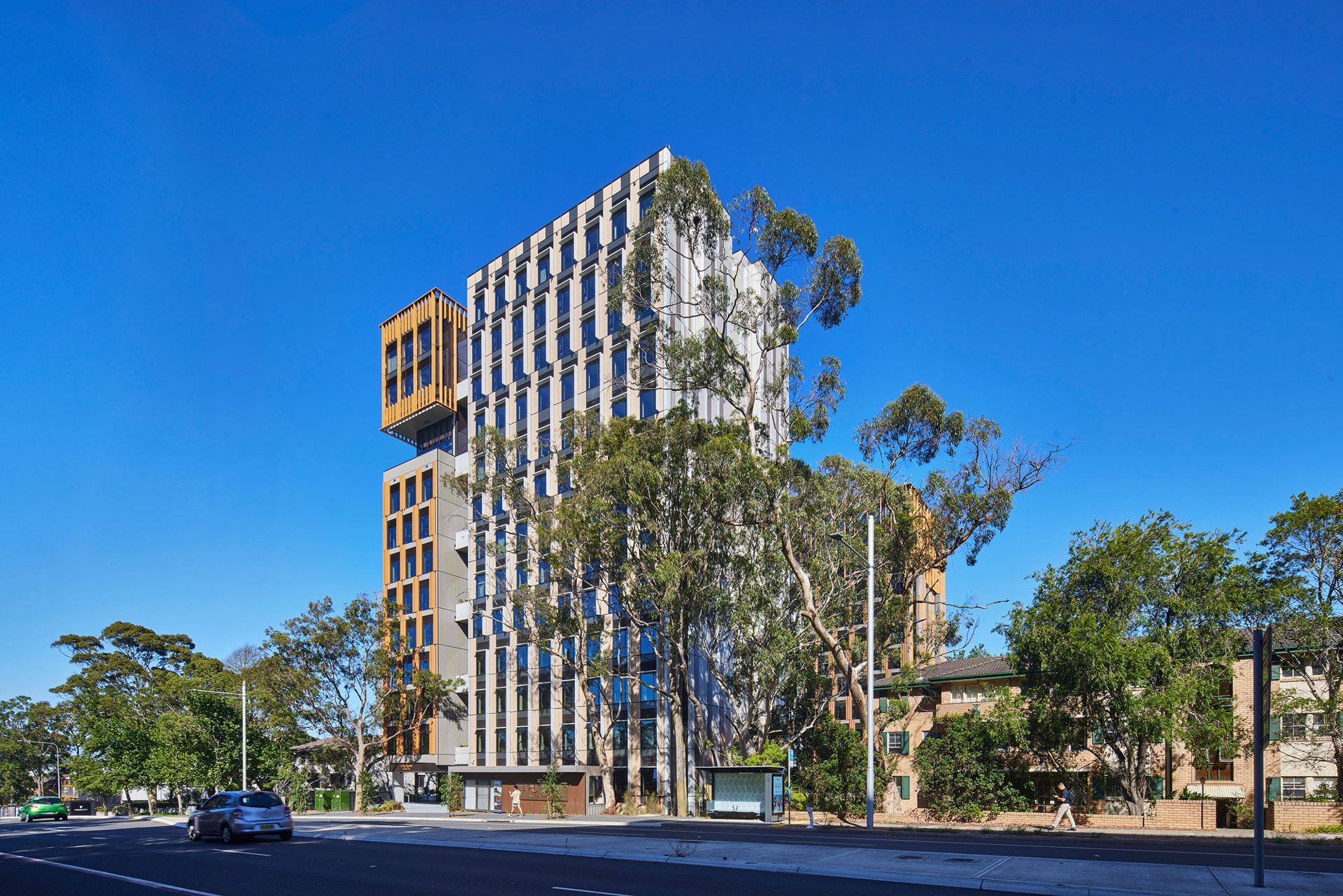
EPIISOD Macquarie Park is a 732-bed, 15-storey purpose-built student accommodation development in the Macquarie University precinct. It was designed by AJC Architects, with interiors developed in collaboration with Nic Graham & Associates, and built by Richard Crookes Constructions. It is the first Sydney project for the EPIISOD brand, launched in 2025 by global operator Centurion Corporation, and it sits between Lachlan Avenue and Herring Road, organised across wings that reduce the perceived bulk of the tower.
The building is more residential than the dormitory model it replaces. Every room has a private bathroom. Shared amenity includes a rooftop wellness level with an outdoor pool, terrace, gym, and yoga studio, alongside double-height common areas for study and social life. Smart entry and connected building systems run throughout.
That mix of scale, repetition, and amenity is exactly where the sector is heading, and the sector is growing fast. Sydney alone has an estimated shortfall of around 25,000 student beds, and only about six per cent of students can currently access purpose-built accommodation, according to CBRE’s Pacific Student Accommodation Report. Nationally, the Student Accommodation Council notes that a typical new PBSA building adds around 700 beds in a single project, which is why developers and builders are moving quickly to close the gap. More projects, larger buildings, tighter programmes. The pressure on delivery is only rising.
Why student accommodation is unforgiving to build
Three characteristics make this building type harder to deliver cleanly than its floor plan suggests.
The deadline is immovable. Most construction projects have some flex in the finish line. A student accommodation building tied to Semester 1 does not. Miss the date and the client has no product, students have no home, and a year of revenue is at risk. In that sense the move-in date behaves like energisation on a data centre: a hard commercial gate that quality and commissioning either clear on time or block. The last twenty per cent of the programme, closing out defects and completing sign-offs, is where that risk concentrates.
Repetition multiplies both good and bad. A 732-bed building is not one building. It is hundreds of near-identical rooms, each with a bathroom, joinery, services connections, and finishes. Get the detail right once and it scales beautifully. Get it wrong once and the same defect repeats floor after floor. A waterproofing detail that fails in room 204 has almost certainly been built the same way in two hundred others. The question is whether anyone catches it in the first rooms or discovers it after the tiling crew has moved through the whole tower.
Wet areas and shared services carry the defect risk. This is not a hunch, it is the data. Research by the NSW Building Commission found that 53 per cent of strata buildings registered between 2016 and 2022 had serious defects in common property, with waterproofing (42 per cent) and fire safety systems (24 per cent) the most prevalent. Earlier work by UNSW’s City Futures Research Centre put the figure even higher for older stock, with up to 85 per cent of apartments built since 2000 in NSW carrying at least one defect. Now layer on a rooftop pool, a wellness level, and connected building systems. Every one of those is a services and commissioning task that has to be verified before handover, not assumed.
Put together, the building type demands a quality process that works at volume, surfaces problems early, and produces a defensible record at the end. Manual systems struggle on all three.

Quality at scale is a system, not a final inspection
The instinct on a repetitive residential project is to inspect hard at the end. By then it is too late and too expensive. The cost of a defect rises sharply once it is buried behind finished work or discovered after the client takes possession, and on a 732-room building the volume of end-of-project checks is simply too large to catch everything in a final sweep.
The alternative is to treat quality as something captured progressively, as the work is done, rather than compiled in a rush before practical completion. In practice that means a few disciplines working together:
Inspection and Test Plans set up before site starts. Templates for the repeating room types, hold points for wet-area waterproofing, and clear responsibility for every sign-off, published before the first trade arrives rather than assembled on the fly.
Defects logged and closed in the field, in real time. When a subcontractor or supervisor finds an issue, it is raised against the specific room and trade, assigned, and tracked to closure, with photo evidence attached. No spreadsheet, no backdating, no surprise list at handover.
A handover record that builds itself. Every inspection, hold-point closure, and certificate filed by location as it happens, so that at practical completion the record is already complete instead of a scramble across inboxes and drives.
This is the logic behind purpose-built construction quality management platforms. On repetitive builds the payoff is specific: a systemic issue caught in the first rooms is a cheap fix, while the same issue caught after it has repeated across the tower is a programme problem. Builders working this way report meaningful reductions in defect-related rework, and just as importantly, they arrive at handover with evidence rather than assurances.
What good looks like on a project like this
For a general contractor or developer delivering student accommodation, or any high-volume residential build, a few practical moves separate a clean delivery from a stressful one:
- Standardise the room, then standardise the check.
- Treat wet-area hold points as non-negotiable, and verify them before the detail is closed up.
- Make subcontractors part of the record, give them a system they will actually use on site, not paperwork to return later.
- Live visibility of what is signed off, outstanding, or at risk beats a weekly status meeting.
- Hand over a structured record, not a folder of PDFs
None of this is about working harder at the end. It is about capturing quality correctly the first time, so that the finish line takes care of itself.

Want to see how top-tier builders are approaching quality at scale on complex, high-volume projects?
Book a free QA Strategy Workshop, a 30-minute session where we map your current QA process and share what is working across the industry.
FAQ
What is purpose-built student accommodation (PBSA)?
Purpose-built student accommodation is large-scale, high-density residential development designed and built specifically for students, usually as hundreds of near-identical rooms with shared study and social amenities. It is developed and managed as an institutional asset class, distinct from converted apartments or private rentals.
Why is delivering student accommodation on time so challenging?
Student accommodation is tied to a fixed academic move-in date that cannot move. Every room, bathroom, and shared amenity must be complete, compliant, and handed over before students arrive, which removes the buffer a staged opening would normally provide and concentrates risk in the final phase of the programme.
What are the most common defects in new residential buildings in Australia?
In New South Wales, waterproofing and fire safety systems are the most prevalent serious defects in recently completed apartment buildings, according to the NSW Building Commission. Waterproofing failures in wet areas are the single largest category, which matters enormously on any building with hundreds of repeating bathrooms.
How does construction quality management software help on large residential projects?
It replaces spreadsheets and paper with digital ITPs, live defect tracking, and a handover record that builds as the work is done. On repetitive projects it catches a systemic issue in the first rooms before it repeats across hundreds more, and it produces an audit-ready record at practical completion.
Dean Centofanti
Marketing & Design Manager
Bringing over 10 years of experience in the creative space, Dean drives Visibuild’s visual identity across marketing, sales, and customer success. With hands-on experience in construction from his time at Hacer and an Advanced Diploma in Building Design, he bridges the gap between design and construction. Dean creates visual solutions that simplify complex processes, strengthen the brand’s visual language, and bring clarity to complexity, turning design into a strategic advantage for Visibuild.